If I had a dollar for every time a customer transmission control module walked into my shop, identifying faulty vehicle control modules dropped their keys, and asked why a "quick check" costs as much as a diagnostic fee, I’d be retired on a beach somewhere. We’ve all been there: the customer thinks you’re just plugging in a cable and reading a screen. They don't see the years of training, the expensive equipment, or the complex engineering inside the vehicle.
As a trainer, my goal is to help you move your shop away from being a "parts-swapping" center and toward being a high-level diagnostic facility. The first step in that journey is mastering the conversation with the customer.
The Shift: From Mechanical to Electronic Systems
Years ago, you could listen to an engine and diagnose a vacuum leak with a piece of hose. Today, the vehicle is a rolling computer network. We aren't just fixing carburetors anymore; we are troubleshooting interconnected Electronic Control Units (ECUs). These ECUs manage everything from fuel injection to your heated seats.
When you explain this to a customer, don’t use engineering jargon. Tell them the truth: their car is now a network of smart modules that have to "talk" to each other. If one module in the network gets a corrupted signal, the whole system might throw a light on the dashboard. Finding that one bad actor in a sea of data is what we are paid for.
Why Basic Scan Tools Fall Short
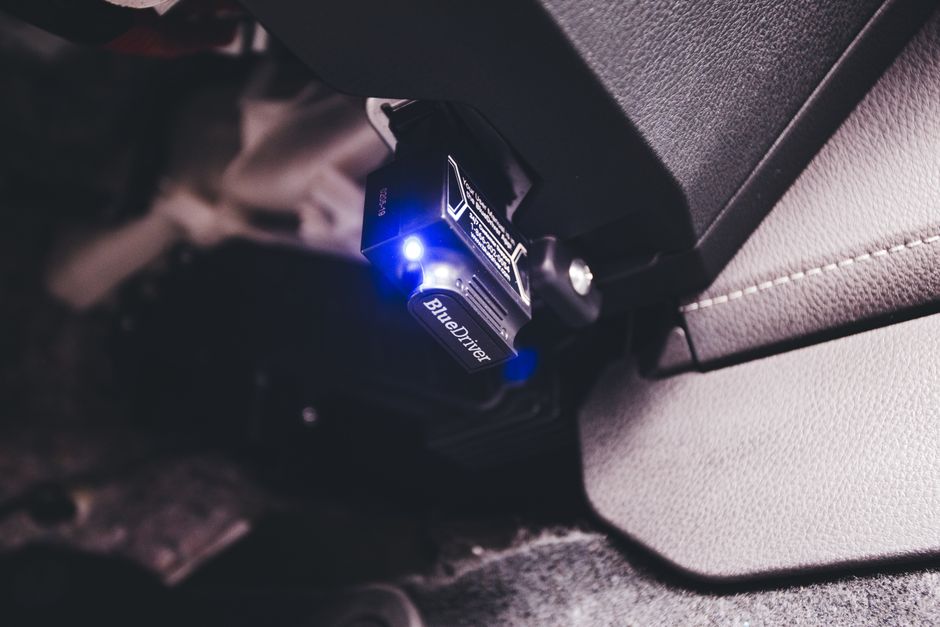
Customers love their cheap, handheld On-Board Diagnostics (OBD) readers. They plug them in, get a code, and assume the part linked to that code is the culprit. We know better. An OBD reader is a generic window into the car’s brain. It gives you the "what," but it never gives you the "why."
If you rely on basic scan tools, you are setting yourself up for comebacks. A "P0300" random misfire code doesn't mean "replace the spark plugs." It could mean a failing coil, a compression issue, a bad fuel injector, or even a wiring harness rubbing against the chassis. Using a cheap tool is like looking at a medical symptom on a website and assuming you have a terminal illness. Real diagnostic workflow requires deep-diving into the system.
The Comparison Table: Diagnostic Levels
Tool Type Capability Accuracy Ideal For Standard OBD Reader Basic Engine Codes Low Quick checks, DIYers Advanced Scan Tools Module Access, Bi-directional Control Medium General repair, fluid resets OEM Diagnostics Full Programming, Deep Data Analysis High System complexity, ADAS calibrationBridging the Gap: Data and Management
To run a professional shop, you need to track how your diagnostics translate into profit. I often look at industry data from sources like Focus2Move to understand vehicle trends and market shifts. It helps me know if I need to invest in a new suite of software for a specific manufacturer.
Furthermore, managing your shop’s efficiency isn’t just about the tools; it’s about the flow of information. I’ve seen shops transform their operations by using tools from companies like Ancoca s.r.l. to better organize their workflow or leveraging analytics platforms like MonkeyData to see which repairs are actually moving the needle for their bottom line. When your shop is organized, the customer feels that professionalism, making it easier to justify the cost of your time.
The Diagnostic Workflow: What You Are Actually Doing
When a customer asks why they are paying a fee, don’t say "I’m scanning the car." That minimizes your work. Walk them through your actual diagnostic workflow. Here is what that looks like:
Verification: Confirming the customer's complaint under the same conditions they experience. Initial Scan: Checking for all Diagnostic Trouble Codes (DTCs) across all modules, not just the Engine Control Module. Data Analysis: Monitoring Live Data streams to see how the system is behaving in real-time. Pinpoint Testing: Using a multimeter or oscilloscope to test circuits and verify if the data is accurate. Confirmation: Ensuring the fix actually corrected the root cause of the problem.Why "Just Replace the Part" is a Trap
Never—and I mean never—recommend a part replacement based on a generic code alone. Telling a customer "we think it's the sensor, let's try that" is the fastest way to lose their trust. If you replace the sensor and the light comes back on, you’ve just proven to the customer that you didn't know what was wrong.
Accurate testing is the difference between a parts changer and a technician. Use your dealer-level or Advanced Driver Assistance Systems (ADAS) tools to look for communication errors between modules. If you spend three hours tracing a frayed wire and find the root cause, you haven't just performed a test; you've saved the customer from buying unnecessary parts and provided a permanent solution.

Communicating the Value
When you present the final invoice, be transparent. Frame your diagnostic time as a professional consultation. If a doctor runs blood tests, you don't argue about the cost of the labs; you want the diagnosis so they can prescribe the right medicine.
- Explain that you are using proprietary OEM (Original Equipment Manufacturer) software that costs thousands per year. Explain that the time spent isn't just "reading codes," but analyzing how the entire electronic system interacts. Highlight that accurate testing saves them money in the long run by preventing "shotgunning" parts—a practice where shops guess at the problem and replace parts until something works.
Final Thoughts: Stand Your Ground
Your shop is a professional environment. You have invested in training, you pay for top-tier diagnostic equipment, and you provide a specialized service. When you stop apologizing for the cost of diagnostics and start explaining the complexity of the vehicles we work on, the "why is it so expensive" questions will stop.
Keep your diagnostic workflow tight, invest in the right OEM tools, and remember: you aren't selling a scan; you're selling certainty in an uncertain electronic world.